Information about this website
How did this website come about? In the late 1990s, I wanted to learn how to create websites. Since I enjoy photography and collect photographic estates, I already had a topic that truly interested me and therefore motivated me.
But there was more. From 1993 to 2011, I managed employment-creation projects for the archiving of photographs in Berlin museums (in Germany). The Employment Office (later the Jobcenter) regarded them as a good opportunity to expand the participants’ computer skills. Initially, IT formed only an experimental area alongside the work in conventional photo labs. Within a few years, however, the focus shifted toward computers. This required not only a learning process within the projects, but also the acquisition of the necessary technology and considerable persuasion efforts in the German museums that were to be won over to digitization.
The major publishing houses were years ahead of them. Many elder managers in German museums at the time saw this merely as an annoying challenge. They lacked qualified staff. Their resistance was also fueled by the suspicion that digital collections accessible via the internet would diminish the importance of their custodians. In addition, the exorbitant prices for IT hardware and software, training, and storage media were a major obstacle.
That’s why this project was originally shaped by professional requirements as well; I had to acquire a range of IT skills.
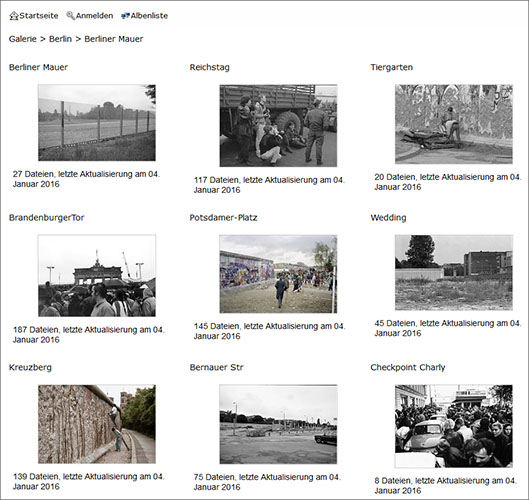
medienarchiv.com (in addition from 2000 also photoinfos.com) could be presented both online and offline via its HTML pages and was therefore useful in persuading archives as well as in training my staff.
Until then, the batteries of digital cameras were often depleted after as few as 20 photos. In the Nikon Coolpix 990, they lasted somewhat longer. It had a 3× zoom lens whose focal length could be shortened with a 0.6× wide-angle converter or extended with a 2× or 3× teleconverter. Another factor in the success of the Coolpix 990 was its astonishing macro capability. You could get as close as 2 cm to the subject. This was spectacular, because at the time analog camera systems could achieve this only with special macro equipment.
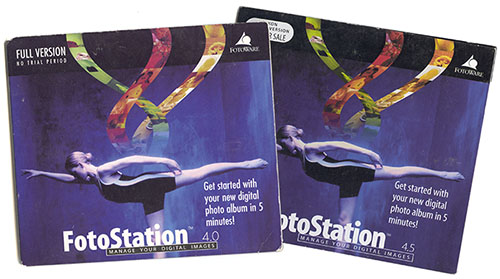
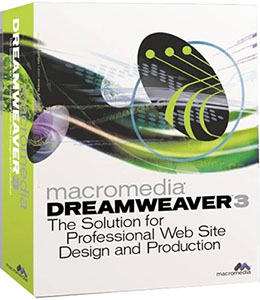
With Dreamweaver and FotoStation, I had the necessary tools for my websites in 1999. Even today, I still prefer to work with these programs, albeit in later versions. Among website creators, Dreamweaver gradually lost its good reputation after 2010. Content management systems became increasingly popular, while Dreamweaver was designed for classic HTML pages based on templates within a website. I prefer sustainable, classic HTML pages for the majority of medienarchiv.com over dynamic CMS websites or image databases, which are repeatedly affected by updates.
However, scanning the photos took too long. Storage media, computer technology, and web space were expensive. The more prices fell and the performance of all components improved, the greater the competition became. The financial investment was never covered by the income. In addition, the image market changed dramatically. More and more cheap (penny stock) or free photos appeared on the internet.
If hosting prices for websites had not dropped significantly, the website medienarchiv.com would probably no longer exist. For a few years, it earned me professional recognition. After 2011, however, it initially lost importance in this respect.
Alongside conventional HTML pages, I also experimented here with various database systems such as Coppermine or Pixtacy. They offer certain advantages, but require a great deal of attention and updates, whereas conventional HTML pages only required a one-time adjustment when mobile content became mandatory. Databases never fulfilled their promises regarding the automated marketing of photos, which became increasingly risky due to legal regulations. In addition, designing the visible interface of databases is more complicated than with HTML pages. Errors, which can never be completely avoided, are also easier to identify and correct in an HTML website than in databases and the programs linked to them.

In addition, several photographers and journalists from my circle of acquaintances contributed photo series. From my father, Hans-Hermann Gade, come photographs from a three-year stay (1967–1969) in Chile. In 1993, I preserved a stack of negatives from the Berlin-Buch hospital. During the dissolution of GDR institutions, the hospital’s equipment and furniture were completely disposed of. The staff had long since been dismissed. Thanks to a tip, I was able to go there just in time to rescue several folders of negatives from a lab that would otherwise have ended up in a dumpster.

Furthermore, photographic estates were increasingly offered on eBay and through other channels, which I acquired or received as gifts from heirs. In 2003, more than 30 banana boxes containing a large part of the estate of Hellmut Münzner were brought to me. He had exposed an incredible number of films and must have used almost all his free time alongside his work as a teacher to travel to many countries around the world. A few years later, I received another twelve full banana boxes with his photos. Presumably, however, an equally large quantity was distributed in small lots or partly ended up in the trash.
Numerous further collections or entire estates followed, often coming to me under adventurous circumstances. The transfer of inherited image rights could often only be clarified retrospectively after tracing the heirs.
In 2017, I was entrusted with the medium-format negatives of the late Richard Kitschigin, once an important employee at RIAS Berlin (Radio in the American Sector), who had previously worked as a journalist for various magazines.
Gradually, these images also flowed into the website medienarchiv.com, which has practically become a permanent exhibition on the internet. The portfolios of living authors and various photographic estates are intended to remain accessible. The image collection is occasionally expanded or updated. See: Authors
The photos come from various authors. Use by third parties is subject to the restrictions of copyright law. Any use of the works on this website by third parties requires prior written consent from the respective rights holder.
It is up to the holders of the image rights whether they wish to license the use of their images. They are under no obligation to do so, and the presence of the images on this website does not constitute an offer for sale. If you are interested, please inquire at info@medienarchiv.com about how to contact the author.

Online Photo Archive
© Thomas Gade| Page | 1 Online Photo Archive |
| 2 Conventional HTML pages or dynamic image databases? | |
| 3 Photographic estates and my own photographs |
How this website came into being
In 1999, I registered the domain medienarchiv.com. Over time, it developed into an extensive online photo exhibition. In August 2021, the website was renamed Fotoarchiv Gade, while retaining its original domain. In 2026, I began translating selected pages into English, where the site appears under the name Gade Photo Archive.How did this website come about? In the late 1990s, I wanted to learn how to create websites. Since I enjoy photography and collect photographic estates, I already had a topic that truly interested me and therefore motivated me.
But there was more. From 1993 to 2011, I managed employment-creation projects for the archiving of photographs in Berlin museums (in Germany). The Employment Office (later the Jobcenter) regarded them as a good opportunity to expand the participants’ computer skills. Initially, IT formed only an experimental area alongside the work in conventional photo labs. Within a few years, however, the focus shifted toward computers. This required not only a learning process within the projects, but also the acquisition of the necessary technology and considerable persuasion efforts in the German museums that were to be won over to digitization.
The major publishing houses were years ahead of them. Many elder managers in German museums at the time saw this merely as an annoying challenge. They lacked qualified staff. Their resistance was also fueled by the suspicion that digital collections accessible via the internet would diminish the importance of their custodians. In addition, the exorbitant prices for IT hardware and software, training, and storage media were a major obstacle.
That’s why this project was originally shaped by professional requirements as well; I had to acquire a range of IT skills.
medienarchiv.com (in addition from 2000 also photoinfos.com) could be presented both online and offline via its HTML pages and was therefore useful in persuading archives as well as in training my staff.
First practical software solutions
In November 1998, Nikon released the Coolpix 990 for 2,500 Deutsche Marks. It was a digital camera with 3.3 megapixels. This number may seem ridiculous today, but it was already sufficient for decent A4-sized prints. You don’t believe that? A Full HD frame has about 2 megapixels and delivers good image quality on displays that are much larger.Until then, the batteries of digital cameras were often depleted after as few as 20 photos. In the Nikon Coolpix 990, they lasted somewhat longer. It had a 3× zoom lens whose focal length could be shortened with a 0.6× wide-angle converter or extended with a 2× or 3× teleconverter. Another factor in the success of the Coolpix 990 was its astonishing macro capability. You could get as close as 2 cm to the subject. This was spectacular, because at the time analog camera systems could achieve this only with special macro equipment.
Web assistant for photo albums in FotoStation
More important to me than the camera itself was the image-archiving software FotoStation 4.0 by FotoWare, which was included in the package. It stood out with a good IPTC editor and excellent assistants for creating websites. You could start it for a selection of photos to generate HTML pages with image overviews and larger individual views, including the display of embedded captions. Similar functions were later introduced in other image viewers, but not with such an extensive feature set and without an editable script for adjusting parameters.
Dreamweaver by Macromedia
In 1997, Macromedia released the website program Dreamweaver for Mac OS. A Windows version followed in 1998. In December 1999, version 3.0 was released and was excellent. Software giant Adobe noticed this as well and acquired Macromedia in order to replace its existing web software, GoLive. Version 8.0 (2005) was the last Macromedia release before the transition to Adobe and was distributed in Germany by the hosting provider Strato for free to its internet customers.
With Dreamweaver and FotoStation, I had the necessary tools for my websites in 1999. Even today, I still prefer to work with these programs, albeit in later versions. Among website creators, Dreamweaver gradually lost its good reputation after 2010. Content management systems became increasingly popular, while Dreamweaver was designed for classic HTML pages based on templates within a website. I prefer sustainable, classic HTML pages for the majority of medienarchiv.com over dynamic CMS websites or image databases, which are repeatedly affected by updates.
My own image agency on the internet?
As a student, I worked for photo agencies. Inspired by this, the question arose as to whether I could market my photos via a website. Perhaps this could become a source of income or even a professional alternative.However, scanning the photos took too long. Storage media, computer technology, and web space were expensive. The more prices fell and the performance of all components improved, the greater the competition became. The financial investment was never covered by the income. In addition, the image market changed dramatically. More and more cheap (penny stock) or free photos appeared on the internet.
If hosting prices for websites had not dropped significantly, the website medienarchiv.com would probably no longer exist. For a few years, it earned me professional recognition. After 2011, however, it initially lost importance in this respect.
Alongside conventional HTML pages, I also experimented here with various database systems such as Coppermine or Pixtacy. They offer certain advantages, but require a great deal of attention and updates, whereas conventional HTML pages only required a one-time adjustment when mobile content became mandatory. Databases never fulfilled their promises regarding the automated marketing of photos, which became increasingly risky due to legal regulations. In addition, designing the visible interface of databases is more complicated than with HTML pages. Errors, which can never be completely avoided, are also easier to identify and correct in an HTML website than in databases and the programs linked to them.
Where do the images come from?
I have been photographing since my school days and was already able to set up a darkroom back then. However, I never had the desire to learn photography as a profession. Nevertheless, the SLR camera became my constant companion. The fall of the Berlin Wall in 1989, the subsequent urban development changes in the German capital, as well as excursions to the new federal states and numerous trips provided plenty of subjects.
In addition, several photographers and journalists from my circle of acquaintances contributed photo series. From my father, Hans-Hermann Gade, come photographs from a three-year stay (1967–1969) in Chile. In 1993, I preserved a stack of negatives from the Berlin-Buch hospital. During the dissolution of GDR institutions, the hospital’s equipment and furniture were completely disposed of. The staff had long since been dismissed. Thanks to a tip, I was able to go there just in time to rescue several folders of negatives from a lab that would otherwise have ended up in a dumpster.
Furthermore, photographic estates were increasingly offered on eBay and through other channels, which I acquired or received as gifts from heirs. In 2003, more than 30 banana boxes containing a large part of the estate of Hellmut Münzner were brought to me. He had exposed an incredible number of films and must have used almost all his free time alongside his work as a teacher to travel to many countries around the world. A few years later, I received another twelve full banana boxes with his photos. Presumably, however, an equally large quantity was distributed in small lots or partly ended up in the trash.
Numerous further collections or entire estates followed, often coming to me under adventurous circumstances. The transfer of inherited image rights could often only be clarified retrospectively after tracing the heirs.
In 2017, I was entrusted with the medium-format negatives of the late Richard Kitschigin, once an important employee at RIAS Berlin (Radio in the American Sector), who had previously worked as a journalist for various magazines.
Gradually, these images also flowed into the website medienarchiv.com, which has practically become a permanent exhibition on the internet. The portfolios of living authors and various photographic estates are intended to remain accessible. The image collection is occasionally expanded or updated. See: Authors
Copyright
The motivation for this website is mainly no longer driven by economic goals. This does not mean that you may use these images for free and without prior written permission and appropriate remuneration. Even though the revenue from some licensing agreements is modest, it helps to cover the costs of acquiring, cataloguing, and preserving photographic estates.The photos come from various authors. Use by third parties is subject to the restrictions of copyright law. Any use of the works on this website by third parties requires prior written consent from the respective rights holder.
It is up to the holders of the image rights whether they wish to license the use of their images. They are under no obligation to do so, and the presence of the images on this website does not constitute an offer for sale. If you are interested, please inquire at info@medienarchiv.com about how to contact the author.
| Page | 1 Online Photo Archive |
| 2 Conventional HTML pages or dynamic image databases? | |
| 3 Photographic estates and my own photographs |
The content on this website was originally written in German. Only later were longer articles
translated into English to reach a more global audience. Hopefully, the supporting AI didn’t
introduce too many errors in the process. For pages that primarily showcase images, however,
the additional effort of creating duplicate versions in two languages is hardly worthwhile.